

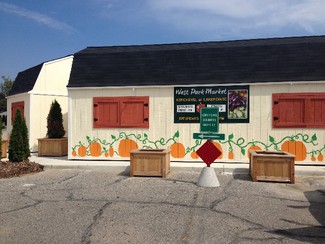
There were protests about the border, and Grosse Pointe Park later said it would tear down
the farmer's market and re-open the road, but the incident speaks
volumes to the segregation that exists in Detroit, and the tensions that
can grow as a result.
Racially concentrated areas of affluence, by the researchers'
definition, are census tracts where 90 percent or more of the population
is white and the median income is at least four times the federal
poverty level, adjusted for the cost of living in each city. Racially
concentrated areas of poverty, by contrast, are census tracts where more
than 50 percent of the population is non-white, and more than 40
percent live in poverty.
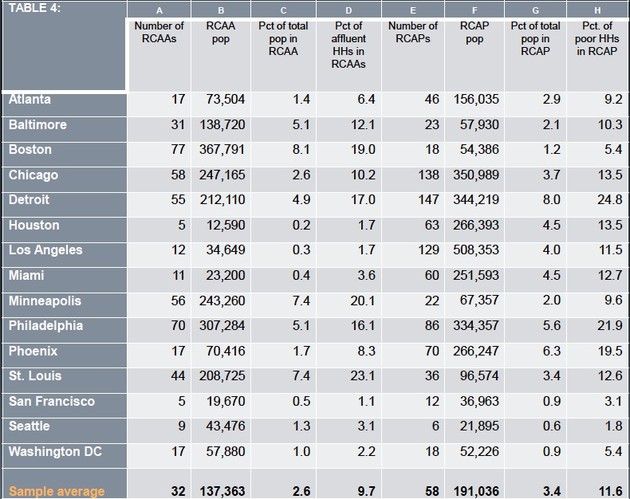
Cities such as St. Louis, Boston, Baltimore, and Minneapolis have
more racially concentrated areas of affluence (RCAAs) than they do
racially concentrated areas of poverty (RCAPs). Boston has the most
RCAAs of the cities they examined, with 77. St. Louis has 44 RCAAs, and
36 RCAPs. Other cities with a large number of racially concentrated
areas of affluence include Philadelphia, with 70, Chicago, with 58, and
Minneapolis, with 56.
In Boston, 43.5 percent of the white population lives in census
tracts that are 90 percent or more white and have a median income of
four times the poverty level. In St. Louis, 54.4 percent of the white
population lives in such tracts.
Still, it's the poor areas, rather
than the areas where whites have self-segregated, that get the most
attention from policymakers, who have sought to ameliorate concentrated
poverty in segregated areas by moving families from black, urban areas
to white suburbs. Beginning in 1989, the federal government started
dismantling housing projects, spending billions to retool the type of housing available to low-income people in urban cores.
Programs may still integrate schools between white and black areas, as I’ve written about before, and they may move black families to white neighborhoods, as I’ve also detailed.
But government programs don’t—and probably shouldn’t—move white
families from wealthy areas to somewhere else (although they do provide
incentives for home buyers or builders to locate in certain lower-income
neighborhoods, thus beginning a process of gentrification).
Public policy has “focused on the concentration of poverty and
residential segregation. This has problematized non-white and
high-poverty neighborhoods,” said Goetz, the director of the Center for
Urban and Regional Affairs at the University of Minnesota, when
presenting his findings at the Lincoln Institute of Land Policy. “It’s
shielded the other end of the spectrum from scrutiny—to the point where
we think segregation of whites is normal.”
Racially Concentrated Areas of Affluence and Areas of Poverty in Large Metro Areas
Goetz and his team are still researching the effects of this self-segregation of whites, but he thinks that a high number of RCAAs may be a negative factor for cities.
This brings to mind a metro area such as Detroit, which emerged from bankruptcy last year, and was characterized by a poor and segregated urban core and wealthy white suburbs that did not contribute to the city’s revenue. The executive of Oakland County, to Detroit’s north, which is one of the whitest areas in the nation, has said publicly he doesn’t feel any incentive to help the city of Detroit.
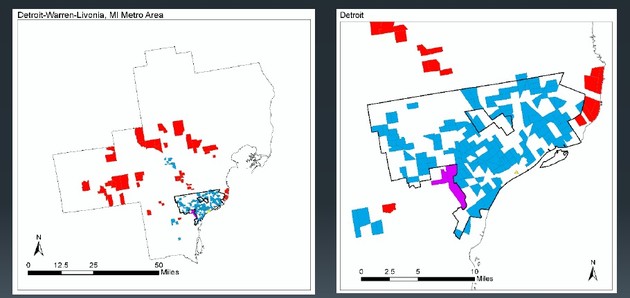
Goetz and his team also researched the RCAAs’ and RCAPs’ distance to downtown. Areas of affluence are located, on average, 21.1 miles from a metro area’s downtown. In Detroit, racially concentrated areas of affluence are, on average, 24.2 miles from the city’s downtown. In Washington, D.C., racially concentrated areas of affluence are 25.1 miles from downtown; in Chicago, they’re 22.1 miles. Racially concentrated areas of poverty, on the other hand, are on average 6.6 miles from downtown, and in cities such as Baltimore, St. Louis, and Philadelphia, they’re much closer.
RCAAs and RCAPs in the Detroit Metro Area
The racial makeup of concentrated areas of poverty differs between regions, too: they're predominantly black in Atlanta, Baltimore, Chicago, Detroit, St. Louis, Philadelphia, and Washington, predominantly Latino in Houston and Los Angeles, and mixed in Boston, Minneapolis, and San Francisco.
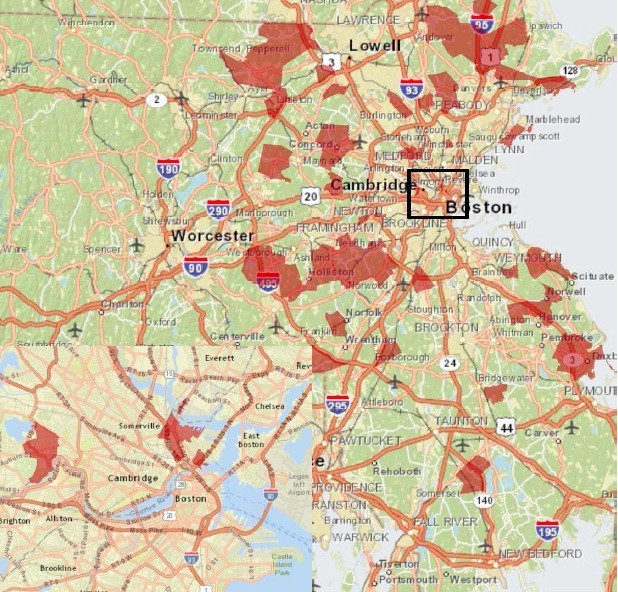
Racially Concentrated Areas of Affluence in the Boston Metro Area
Some of their further research has already generated interesting results. They looked into how federal housing dollars are spent in areas of poverty and areas of affluence in the Twin Cities, and found something surprising: The government spends just as many housing dollars in areas of poverty as it does in areas of affluence.
In racially concentrated areas of affluence, federal dollars come in the form of the mortgage-interest deduction. In areas of poverty, they come through vouchers and subsidized housing units. In the Twin Cities, the total federal investment in the form of housing dollars in RCAAs was three times larger than the investment in RCAPs. On a per capita basis, it was about equal.
Federal dollars are now being spent to “subsidize racially concentrated areas of affluence,” Goetz said.




0 comMENTS:
Post a Comment