14 Words by Email

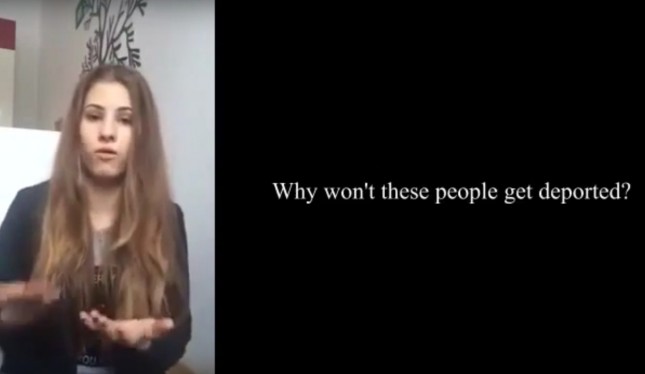
“Please, men of Germany. Do something!”

Hello, you can read the newspapers but this video is about the real situation in Germany. I would like to tell everyone about this on Youtube and Facebook. I am almost 16. I would like everyone to know what is going on, what I am authentically feeling at this moment. .

Seasoned Feminist Not So Tolerant After Being Raped By ‘Syrian’ Refugees

Amanda Crosby was like many other Western girls, emotional and completely naive to human behavior as she was taught from a young age that everybody is equal. “I thought, you know…If they just came here they might stop gang-raping women and torturing homosexuals,” she explained to our reporters

Was there really a holocaust

The Holocaust has become the greatest instrument of sympathy which any nation has ever been able to use to gain support for wars, expansion and foreign-aid: This has made Israel the world's sixth strongest military power. .

Wotan

“In Germany shall divers sects arise, Coming very near to happy paganism. The heart captivated and small receivings Shall open the gate to pay the true tithe.”

Ingratitude

The chief of firemen stands in front of a blazing house. A sobbing woman says her child is still in there. She implores him to send a fireman into the inferno to save her child.

Monday, 30 September 2013

WHITE GENOCIDE WORLD WIDE ! Today SWEDEN! 20 muslims refugees rape an 11 year old girl in Swedish bathouse

To all our Swedish media chose this week to cover up the gang rape that occurred at Husby pool in northern Stockholm on Sunday. 20 unaccompanied refugee children from Björkuddens transit accommodation is suspected of molesting a 11-year-old Swedish girl


Share on facebookShare on emailShare on printMore Sharing ServicThe incident occurred when the tax-funded welfare Company Attendo Care made a trip to Husby bath with 20 of the unaccompanied refugee children who live on the company's facility Björkudden in Solna.

Refugee children, who reportedly will be in 17 years of age, attacked a group of Swedish girls who were around 11 years old. The girls were harassed by tafsningar and insults while trying to escape from immigrant gang tore refugee children off their bathing suits.

A number of boys in the girls' company tried to stop the rape but was instead beaten. The abuse stopped only when a lifeguard reached the spot.

After the incident locked bathhouse staff in the unaccompanied refugee children in a special room while waiting for police. A police report was drawn up since the site.

Rape commonly
Before his visit, Attendo staff have had a conversation with the asylum seekers, where among other things explained that they now had to control himself and not grope or rape some of the girls in the pool.

Several asylum accommodation has previously had problems with the unaccompanied refugee children have been raped and committed sexual abuse, such as Swedish girls come to sing Lucia songs. In Gullspång have female staff had to quit because of sexual abuse.

Recurring immigrant problem in Husby bath
rape and sexual abuse are common in the publicly funded Husby bath, which is Sweden's most lavish baths. In March 2005, raped a woman of an immigrant boy in the pool and in 2006 became a 16-year-old girl gang raped by an immigrant gangs.

As a blogger Henrik Johansson says Mariebad Officer Erik Santos that it now has procedures in similar events, which we can easily isolate the targeted group. It also has a direct number to the police and a contact person at the station. In addition, plainclothes police periodically been present in the bath house, and has also had meetings with staff.

http://www.friatider.se/11-aring-gruppvaldtogs-pa-badhus

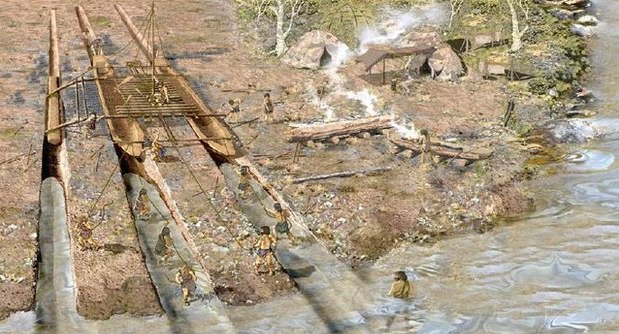
WALES: Monmouth’s Bronze Age Boat Builders


Bronze Age Boatbuilding
(Peter Bere)
MONMOUTH, WALES—A pair of 100-foot-long channels in the clay could have been used to drag boats into a prehistoric lake, according to archaeologist Stephen Clarke of the Monmouth Archaeological Society. The channels are shaped like the bottom of a canoe, and are accompanied by a third smaller groove that could have been made by a boat’s support arm. No actual boat timbers have been found, but Clarke thinks the area could have supported a settlement and a boat-building industry during the Bronze Age. “I have seen 14-ton machinery sliding in the clay so it would have been easy to push a boat,” he said.

Sunday, 29 September 2013

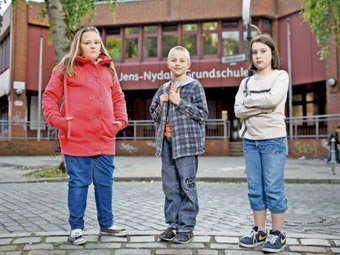
The Extermination of Whites in Europe: “We Are the Last 3 German Children in Our School.”

3h343-bildThere are now only three German children left in the Jens-Nydahl-Grundschule in Kreuzberg, Berlin—a shocking demonstration of how Europe is being ethnically cleansed by Third World immigration.
A story in the Bild magazine on the development was headlined: “We are the last 3 German children in our German school. The rest are Muslims.”
Kreuzberg in Berlin has long been a destination for Turkish immigration into the German capital, and now the inevitable point has been reached where Germans have been ethnically cleansed from that part of the city.
In the playground Talina (11), Svenja (11) and Jason (9) can’t understand a word. Because, here, their classmates only speak Turkish and Arabic, the Bild article continued.
Here 99 percent of the 313 pupils have an immigrant (Muslim) background. For 285 of those, the parents receive financial support from the state.
Talina is in the 6th year. “When she first went to school, she could read and write her first words. Her fellow pupils couldn’t say ‘Thank you’, ‘Please’ or ‘Good morning’,” says her mother Mara M. (45).
The German children are teased about being ‘pork eaters’. Her classmate Svenja: “I wish there were more pupils who could speak my language.” Jason’s mother says: “It’s not good that there are so few German children at the school.”
A teacher was quoted by Bild as saying: “We have tried in vain to get Germans in the school. Now we’re concentrating on the clientele that we have. In the canteen, there is no more pork.”
Kreuzberg is now the largest Turkish city outside of Turkey and is known as “Kleine Istanbul” (Little Istanbul).
According to Berlin government statistics, 90 percent of the inhabitants of certain areas of Kreuzberg live below the poverty level and subsist on taxpayer handouts—making a mockery of the liberal claim that immigration into Europe is needed to “keep the pension system and economy running.”

The Dictatorship of the Memorandum is here! The State and it’s lackeys persecute Greek Nationalists!

It has already begun, the international usurers have stepped up their full scale attack on the peoples nationalist movement. GOLDEN DAWN IS HERE, and the Greek people know what is happening and stand by the Peoples Association!
Raise the flags high! Our comrades in Greece are organizing a protest against this treacherous and illegal decision! More details to come!
Right now, hundreds of nationalists are demonstrating their resistance against this vicious regime that dominates our country. The coalition government subservient to the international usurers along with the leftist traitors execute the orders of the foreign decision makers.  Their aim is to exterminate the people’s nationalist movement and have a nice, smooth “bloodless” 3rd memorandum. Golden Dawn does not submit!

Friday, 27 September 2013

Barilla pasta makes Anti gay remark now gays are attacking them


Pasta chief's anti-gay talk puts company in hot water
Reuters Photo: Max Rossi
A man throws Barilla spaghetti into hot water Friday, Sept. 27, at his home in Rome, Italy.
31 min ago By Steve Scherer of Reuters

ROME — When pasta king Guido Barilla found himself pilloried on social media for saying he would never use a gay family in his advertising, rival pasta maker Buitoni was quick to capitalize.

A picture on its Facebook page from the inside of an open door featured the caption: "At Buitoni's house, there's a place for everyone."

It was a stark demonstration of the rising power of social media: Barilla's comments to a medium-sized Italian radio station Wednesday quickly became a global public relations disaster with a likely damaging effect on sales.

Related: Italy pasta baron's anti-gay comment spurs boycott call

The comments that he would "never" do an ad "with a homosexual family" to a station that has barely more than 2 million daily listeners spread like wildfire on Twitter and Facebook, sparking worldwide calls to boycott Barilla products Thursday.

In his official apology, Barilla said he was sorry "if my words generated misunderstandings and polemics" and "if I offended some people." He said he was trying to say "simply that the woman plays a central role in a family."

The comments will weigh on U.S. sales in the short term, and Barilla's immediate response to the uproar was "muddled and odd," Ashley McCown, a crisis communications expert at Solomon McCown in Boston, told Reuters.

Related: Pasta king under fire walks back anti-gay comments

"In the U.S. people want to feel good about the things they buy and who they buy them from."

The privately owned Barilla company was founded by Guido's great grandfather more than 130 years ago and is the world's biggest pasta maker.

Seeking to boost sales outside of crisis-hit Italy, Barilla has recently focused on expanding in the U.S., its second biggest pasta market, by introducing microwaveable meals and more ready-made sauces.

"I'm Italian, I'm gay, I'm married legally to a man, I have three adopted children. I had Barilla pasta for dinner last night. Today, tomorrow and forever more I will choose another brand of pasta. Good bye Barilla! You lose!!!"

— David De Maria, on Barilla's U.S. Facebook page

His radio comments came after the interviewer asked him about allegations this week from Laura Boldrini, president of the lower house of parliament, that Italian advertising was full of gender stereotyping.

Barilla, whose ads often picture mothers serving their families at the dinner table, disagreed, and was then asked whether he would feature a gay family.

After saying he would not, he spoke at length about his belief in the "classic family," adding however that he supported gay marriage, which is illegal in Italy, but not adoptions by gay couples.

In the U.S., gay marriage is now legal in 13 states and, unlike in Italy, the gay rights movement continues to build momentum and break down barriers.

"I'm Italian, I'm gay, I'm married legally to a man, I have three adopted children. I had Barilla pasta for dinner last night. Today, tomorrow and forever more I will choose another brand of pasta. Good bye Barilla! You lose!!!" David De Maria wrote on Barilla's U.S. Facebook page.

SPAGHETTI IS STRAIGHT

The controversy generated several Internet satires. BuzzFeed featured a picture showing heterosexual couples lovingly eating pasta together with the words: "Spaghetti is straight."

Another image posted widely on Twitter and Facebook showed the trademark blue Barilla pasta box with the letters "Bigotoni" on it, rather than "Rigatoni."

While Barilla's comments were condemned by most, others said the gay community was overreacting.

"We may not agree with him but he is just expressing his opinion and doing it in a respectful way," said JasonD79, who said he was gay, in reaction to a news story on Facebook. "He is not saying gays can't work for them or anything, he is just saying he will not do an ad with a gay family."

Related: Q&A: What anti-gay law in Russia is all about

After its first apology, Barilla posted a second, more contrite version on its U.S. Facebook page several hours later that recognized that it may have offended some of its own employees.

"While we can't undo recent remarks, we can apologize. To all of our friends, family, employees, and partners that we have hurt or offended, we are deeply sorry," it read.

Only time will tell how much the boycott will hurt Barilla, which saw profit tumble 21 percent in 2012.

"In the short term, it is a threat to sales. What's yet to be seen is, is there really going to be a long-term impact?" McCown said.

http://news.msn.com/world/pasta-chie...y-in-hot-water
UK:Smash the reds.Ns vs Antifa in Liverpool !

Thursday, 26 September 2013

Ozzy Osbourne to Play Israel, Won't Bow to Pressure

Rock and Roll Hall of Famer Ozzy Osbourne will bring his Ozzfest festival to Israel in September. His wife and manager Sharon Osbourne, who's father is Jewish, gave a special video conference announcing that they would not cancel the show for any political reasons.

“Music goes beyond politics because it is the international language of the world," she said. “I could not be more excited or proud about bringing Ozzfest to Israel for the first time.” She also stated that they hadn't received any calls to boycott Israel, unlike some other big name acts. The tours promoters promise several Israeli metal bands will perform as well.
Also performing will be the Grammy award winning band Korn, who's lead singer Jonathan Davis released a short video promo expressing his excitment for the Israeli tour date. Korn's former guitarist Brian "Head" Welch travelled to Israel in 2005 to be baptized in the Jordan River after quitting the band to become a born-again Christian.

Wednesday, 25 September 2013

Iranian Leader Condemns Nazi 'Massacre' of Jews

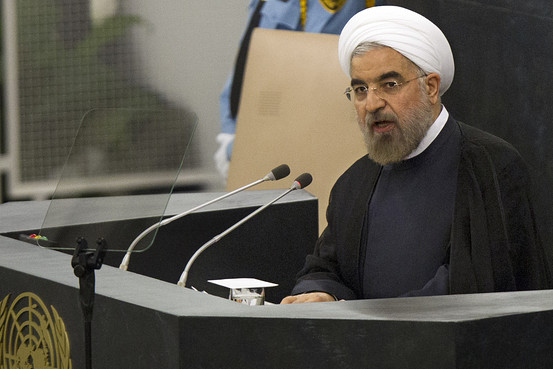
NEW YORK—Iranian President Hasan Rouhani broke from his government's questioning of the Holocaust, telling American media editors that "the Nazis committed a massacre against the Jewish people and we condemn that."
Mr. Rouhani's remarks marked a sharp break from his predecessor, former President Mahmoud Ahmadinejad, who reveled in questioning the Nazi's role in killing six million Jews and sponsored international conferences dedicated to re-examining the subject.
Mr. Rouhani himself, a week ago, told NBC News that he wasn't an "historian," when asked if he believed the Holocaust took place.
Associated Press
Iranian President Hasan Rouhani addresses the U.N. General Assembly on Tuesday.
But in a breakfast meeting American editors and media personalities on Wednesday in mid-Manhattan, the Iranian cleric and politician condemned the slaughter of Europe's Jews.
"The massacre of Jews by the Nazis is condemnable. We never want to sit side by side with a Nazi," Mr. Rouhani said.
The 64-year-old cleric reiterated that the exact scale of the Nazi atrocities, particularly the numbers killed, should be left to historians.
The tone of Mr. Rouhani's overall comments was part of a broader charm offensive launched by his government that is aimed at ending Iran's diplomatic isolation and rolling back expansive economic sanctions that have drastically reduced Tehran's oil exports and access to the international banking system.
On Tuesday, Mr. Rouhani offered to work with the U.S. to address international concerns that Iran has been secretly trying to develop nuclear weapons.
His foreign minister, Javad Zarif, is set to meet Thursday with U.S. Secretary of State John Kerry in the highest-level diplomatic engagement between Washington and Tehran since the 1979 Islamic revolution in Iran.
Mr. Rouhani's campaign hasn't gone on without a hitch.
On Tuesday, the White House offered to have a direct meeting between President Barack Obama and Mr. Rouhani, or at the least a handshake, on the sidelines of the United Nations General Assembly. The offer fueled hopes of potentially a major diplomatic thaw between the U.S. and Iran.
Mr. Rouhani's delegation declined the offer, fueling a belief inside the Obama administration that Iran's leader is too encumbered by his political opponents in Tehran to take a diplomatic risk.
But Mr. Rouhani said on Wednesday that his government simply needed more time to prepare for such a historic meeting.
"We have no problem shaking Mr. Obama's hand or negotiating, but we need a plan of action to ensure these meetings create the conclusions that we want," Mr. Rouhani said. "We did not have enough time to make it happen. We never have a problem shaking Mr. Obama's hand."
White House officials said they believed Mr. Rouhani rejected an encounter with Mr. Obama because of domestic political constraints in Iran.
Mr. Rouhani also again committed to pursue negotiations over Iran's nuclear program with the five members of the U.N. Security Council, plus Germany, a diplomatic bloc known as the P5+1. A new round of talks has been scheduled for next month in Geneva.
Iran's president said Tehran is prepared to remove Washington's concerns that Iran is secretly pursuing nuclear weapons. He specifically cited Iran's willingness to work more closely with the U.N.'s nuclear watchdog, the International Atomic Energy Agency.
"If there is a reasonable concern, we want to assure you of our peaceful intentions," Mr. Rouhani said.
Still, he reiterated Iran's position that it would continue to produce nuclear fuel through the enrichment of uranium—a violation of U.N. Security Council resolutions requiring that Tehran stop.
Iran's demand that it continue to be allowed to enrich has been the primary issue blocking nearly a decade of diplomacy aimed at ending the Iranian nuclear dispute.
"We seek to ensure there is no discrimination between Iran and other nations," Mr. Rouhani said. "We seek nothing more than our legal rights " under the U.N.'s nuclear Nonproliferation Treaty.

wsj.com

WATCH 12-Year-Olds Forced To Act Like Slaves And Called N**ger By Teachers

Tuesday, 24 September 2013

We Salute You !


Scottish police upset over racism

Scottish police have expressed dismay that Jewish community members see antisemitism as “normal”.
Around 350 people from a cross-section of Scottish Jewry responded to the Scottish Council of Jewish Communities’ report on Being Jewish in Scotland, which was funded by the Scottish Government. A key finding was that “80 per cent of respondents expressed the view that they feel threatened and vulnerable because, as Jews, they are held responsible for the actions of Israel”, explained Scojec’s Fiona Frank.
Following a presentation to Police Scotland, one officer reported: “There was sadness that a significant level of bigotry and antisemitism seem to be accepted by victims as a ‘normal’ occurrence and, therefore, a part of life — [and] not worth reporting to police.”

Orthodox Jew charged with sexual abuse of kids seeks asylum in Israel under Law of Return

British haredi man charged with child sexual abuse attempts to get into Israel using phony passport, seeks citizenship under law allowing all Jews to immigrate to Jewish state.

Does the Law of Return trump international law? This question will have to be ruled on by the High Court of Justice, following an attempt by an ultra-Orthodox Jew from England, who was charged with sexual abuse of children, to find asylum in Israel.

The man has been detained already for over a half year. In a rare instance, the Interior Ministry decided not to grant him standing under the Law of Return, due to the heavy suspicions against him in the UK.
Now the issue comes before the High Court, which is expected to rule soon, in an unusual case – is it possible to grant standing under the Law of Return to a Jew accused of pedophilia who has fled his home country in order to escape prosecution?

An indictment was filed gainst T., 48, for indecent assault on a minor. After charges were announced, T. fled to Israel together with his family. But when he landed, he was arrested for using a fake passport.

The Immigration Authority refused to grant him standing under the Law of Return due to the charges against him in the UK, and even sought to deport him back to his homeland.

In response, T. filed an appeal with the High Court via Attorney Amit Hadad from the law firm of Attorney Jacob Weinroth.

Lawyers have requested to back the position of the interior minister, and not grant T. Israeli citizenship.

“The danger to public safety is seen not only from the crimes, but also from his fleeing from England,” said the State Prosecutor’s Office representative, Attorney Reuven Adleman

Source jewishynet

Anti-white racists get rumbled In spectacular European Parliament (FULL VIDEO)

Shocking European legislation planned to legalise genocide of white Europeans: -- http://www.youtube.com/watch?feature...&v=V1rQPzl85-4 18 September 2013 - Brussels. At the EU Civil Liberties, Justice and Home Affairs Committee meeting in Brussels Nick Griffin, a representative from the UK, did not hesitate to point out that the ultimate goal of the EU's proposed " Statute for the Promotion of Tolerance legislation" being debated, is genocide.

Other European parliamentarians also warned that 'the goal of this legislation is to criminalize any opposition to the massive third-world immigration and the forced assimilation being forced upon Europe.'


"This Pandora's box of oppression would release upon the indigenous peoples of Europe all manner of fascist restrictions from enforced child brainwashing and compulsory media propaganda quotas right through to thought crime Gulags.These following paragraphs are amongst the new law being included in the EU's proposed "Statute for the Promotion of Tolerance: "
Section 7. Penal Sanctions
(a) The following acts will be regarded as criminal offences punishable as aggravated crimes:
(i) Hate crimes as defined in Section 1(c).
(ii) Incitement to violence against a group as defined in Section 1(a).
(iii) Group libel as defined in Section 1(b).
(iv) Overt approval of a totalitarian ideology, xenophobia or anti-Semitism.
(v) Public approval or denial of the Holocaust.
(vi) Public approval or denial of any other act of genocide the existence of which has been determined by an international criminal court or tribunal.

Explanatory note:
This Sub-Section defines acts punishable as aggravated crimes. Sub-paragraph (vi) does not affect public (or private) discussions and differences of opinion as to whether other acts – not covered by decisions of international courts or tribunals - also amount, or fail to amount, to genocide.
(b) Juveniles convicted of committing crimes listed in paragraph (a) will be required to undergo a rehabilitation programme designed to instil in them a culture of tolerance.
(c) Crimes listed in paragraph (a) will not be considered political offences for purposes of extradition.
(d) (e) Victims of crimes listed in paragraph (a) will have a legal standing to bring a case against the perpetrators, as well as a right to redress.
(f) Free legal aid will be offered to victims of crimes listed in paragraph (a), irrespective of qualification in terms of impecuniosity.
http://www.bnp.org.uk/

Monday, 23 September 2013

Swiss region bans full-face Muslim veil

GENEVA (AFP) -
Voters in Switzerland's Italian-speaking region Sunday slapped a ban on wearing full-face veils, a move condemned by the country's Muslim community and Amnesty International.Results from a referendum in the southern canton of Ticino showed that 65 percent of the electorate backed a proposal to forbid the covering of faces in public areas by any group.Echoing bans in France and Belgium, the measure does not single out Muslims directly.It states that "no-one may mask or hide their face on the public highway, nor in places open to the public, except places of worship, nor those offering a public service".But in a clear nod to the Islamic tradition of veils for women, it adds that "no-one may require another person to cover their face for reasons of gender".The measure was the brainchild of right-wing Ticino populist party "Il Guastafeste" -- whose kingpin Giorgio Ghiringhelli makes no secret of his criticism of Islam."This is an historic vote for Ticino," Ghiringhelli told Switzerland's Italian-language broadcaster RSI."And not just for Ticino, but also for Switzerland and abroad, where the Ticino example could spread."It is the first time that any of Switzerland's 26 cantons -- the equivalent of US states -- has imposed such a ban.It will be anchored in Ticino's constitution, making it tough to overturn, and local lawmakers will now have to craft legislation to implement it and impose penalties on those who fail to respect it.Reacting to Sunday's results, Switzerland's Central Islamic Council slammed the vote as "yet another loud expression of social Islamophobia"."We in the Council see this as part of a string of attempts to make life increasingly difficult for Muslims in Switzerland and to ban symbols of Islam from the public arena," it said in a statement."It restricts the fundamental constitutional rights of Muslim women without any pressing need or national legal basis."Leading human rights group Amnesty International also condemned the vote."Fear, and the creation of a problem where there isn't one, have beaten reason and respect, to the detriment of the basic rights of the entire population," the head of Amnesty's Swiss section, Manon Schick, said in a statement.She added that she hoped the Swiss parliament would speak out, given that the right to religious freedom is inscribed in the country's constitution.Referenda are the bedrock of Switzerland's system of direct democracy, with citizen-campaigners able to force votes if they collect enough signatures from voters.With 350,000 people, Ticino is one of the smallest cantons in Switzerland, a nation of eight million.There are some 400,000 Muslims in Switzerland, mainly for North Africa and the Balkans.They represent five percent of the population of Switzerland -- but an even lower proportion of just two percent in Ticino, the Central Islamic Council said."This result underlines a certain degree of disquiet in the population," said Swiss President Ueli Maurer.He underlined that it came in the wake of a nationwide referendum in November 2009 which led to a ban on the construction of new mosque minarets beyond the four already built in the country.That referendum was pushed heavily by Maurer's right-wing populist Swiss People's Party, known for its anti-immigration stance.Switzerland faced a barrage of international criticism following the 2009 vote

Former Slavery Strongholds Harbor Majority Of Nation's Racists, Study Shows (INFOGRAPHIC)

150 years has done little to shift anti-black attitudes in the some parts of the country, new analysis of census data and opinion polls shows.
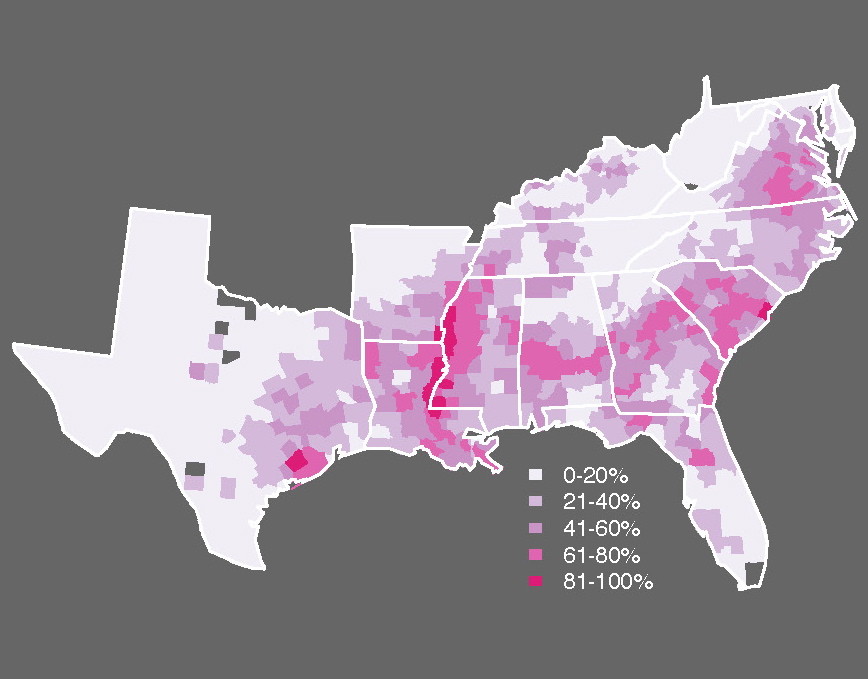
In what is believed to be the first report to quantitatively demonstrate the lasting effects of slavery on contemporary political attitudes in the American South, a team of political scientists from the University of Rochester examined party affiliations and views on race-related policies such as affirmative action of more than 39,000 southern whites.
What they found: That a "slavery effect" persists among white Southerners who currently live in the Cotton Belt where slavery and the plantation economy thrived from the late 18th century into the 20th century. Residents of those counties are much more likely today to express more negative attitudes toward blacks than their fellow Southerners who live in nearby areas that had few slaves; are more likely to identify as Republican; and are more likely to express opposition to policies like affirmative action, the study authors concluded.
Take a look at their county-by-county view of where slaves were concentrated in 1860, based on the U.S. census, and where they say racial resentment is most likely to persist today. Story continues below.
slavery strongholds
Examining data from nearly all of the 1,344 Southern counties in the Cotton Belt, researchers found that a 20 percent increase in the percentage of slaves in a county’s pre-Civil War population is associated with a 3 percent decrease in whites who identify as Democrats today and a 2.4 percent decrease in the number of whites who support affirmative action.
“In political circles, the South’s political conservatism is often credited to 'Southern exceptionalism,' but the data shows that such modern-day political differences primarily rise from the historical presence of many slaves," said Matthew Blackwell, one of the study authors, expanding on the report's conclusion that without slavery, the South today might look fairly similar politically to the North.
Read more of what Blackwell and his colleagues found and their explanation for how the "slavery effect" is able to persist into the 21st century, here.

Note: Now the niggers are free and majority in US.Hail shitjewishlincoln!

Sunday, 22 September 2013

Remember Kriss Donald

On 15 March 2004, fifteen year old schoolboy Kriss Donald, was walking down a Glasgow street.
When he was attacked kicking and screaming begging to not be hurt. He was forcibly bundled into a car by five Muslim men, led by Imran Shahid.
Kriss was taken on a 200 mile journey to Dundee and back by his Muslim attackers.
During the journey the Muslim gang subjected him to shocking torture.
His eyes were poked out and his genitals were cut off.
The Muslim gang, finally took Kriss to Celtic's football training ground.
Where they held him down by his arms, and stabbed him thirteen times.
At this stage Kriss was still alive.
The Muslim gang then doused Kriss in petrol and set him on fire and left him to die.
Kriss is believed to have crawled a few yards after the Muslim gang had gone, before dying.
The Muslims then fled to Pakistan, flying from Manchester airport, believed to have been helped by members of Glasgow's Muslim community.
They were returned to the UK from Pakistan, despite that government figures were at times alleged to have been reluctant to pursue the case for the return of the men, for diplomatic reasons.

On 8 November 2006, three men were found guilty of the racially motivated murder of Kriss Donald. All three had denied the charge; however, a jury at the High Court in Edinburgh convicted them of abduction and murder. Each of the killers received sentences of life imprisonment, with Imran Shahid given a 25-year minimum term, Zeeshan Shahid a 23-year minimum and Mushtaq receiving a recommended minimum of 22 years.
Far as I know, most child killers get much longer than they got.
The case was mostly ignored by the media and in England and Wales it got one day
At the time of the murder, Peter Fahy, spokesman of race issues for the Association of Chief Police Officers noted that the media as a whole tended to under report the racist murders of white people, noting:
"it was a fact that it was harder to get the media interested where murder victims were young white men''.
No surprise that the race relations industry ignored Kriss's killing as well.
With Kriss obviously being the wrong colour, white.
For example, how many articles have Lancaster Unity done on the murder?
People such as Ketlan, Garside, the Gables, and other low life types will say nothing, because Kriss was the 'wrong' sort of racist victim, white.
The contrast is striking between the case of another so say "racist" murder in London some 20 years ago, who was stabbed once and died in Welling, South London, by person or persons unknown. Hundreds of people are murdered in London every year and there are many who have never had their cases closed. Whether somebody uttered some mean words before doing the evil deed is of no consequence, murder is still murder. Its not somehow made a worse crime if somebody utters some forbidden magic words beforehand.
The media have declared, without evidence, witnesses, or convictions, that the unnamed person(we all know who it is)was murdered by 'racists', they have turned his murder into a "guiltfest" for their white middle class friends. They have been beating the rest of us with the racism stick ever since and we have not been allowed to forget it with monthly reminders.
As for kriss Donald, silence. No memorial stone no nothing.

People are saying justice has been served. IT HAS NOT BEEN! Because 2 of the 5 are still at large.
While the media like to rub the European people of our lands noses in it over other, not as serious racial murders from over 20 years ago. Like one guy who was stabbed once by some drunken louts in London over 20years ago. Followed by the police bungling things up. Which if anybody has any dealing with the police a large % of the time they hardly ever catch the criminals. Hundreds of people are stabbed, shot and killed every year in London. No its not very nice but other cases are of no comparison to young Kriss D who was a CHILD just 15 years old. He was kidnapped, taken hostage, tortured beyond belief, set on fire and left to die like a dog at the side of the road ALONE. And we hear nothing! Not even on the anniversary of his death!

There is no memorial garden with 24 hours CCTV, no charity in his name nothing. We see nothing of his mother she has made no money from this case. Kriss has been swept under the carpet like some kind of inconvenient truth that goes against the multicultural agenda to stop us complaining about mass population change because that's what it is now because its gone past immigration. People in England across the border don't even know about him. Yet we here in Scotland know one famous “racial” murder victims inside leg measurement and are beaten with the proverbial racism stick monthly.
Whether some nasty names were uttered before the evil deeds were committed is of no consequence.
Why are the Pakistani community in Pollokshields not continually reminded of this vile crime like the ethnic British are over a certain somebody else? Maybe they could learn a few lessons, like us who apparently need constantly reminding of a certain 20year old murder in London every week?

This is What Happens When You Wear a Nazi Uniform in Court (video)

CANADA allows veiled Muslim women to bypass airport security checks

CANADA allows veiled Muslim women to bypass airport security checks
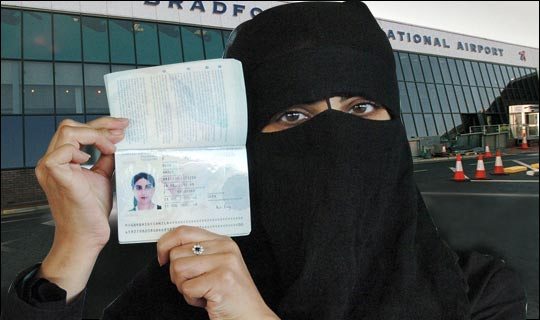
In Canada now, political correctness trumps security. Flying while Muslim means you won’t be forced to uncover your face or lift up your burqa before boarding a plane. Are we feeling safer yet?
Each passenger must submit his/her own passport and boarding pass so they can be identified at the last check in point before boarding the aircraft. EXCEPT FOR MUSLIMS! Canada airport security will not ask a veiled Muslim to remove her veil and prove her identity.
Frequent flyers know the drill: take off your shoes, surrender your tweezers and pack your shampoo in those little plastic baggies before lining up for the naked body scanners. But lift your niqab? Apparently not.
QMI Agency can reveal thatneither airlines nor security services are asking Muslim women to lift their veils and prove that the face beneath matches their photo ID.
pakistan-vi
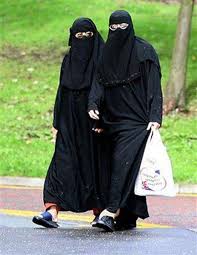
The issue came to light through a video taken by Mick Flynn of Bradford, England. Flynn was boarding a flight at Montreal’s Trudeau International Airport when he witnessed two women with their faces covered board an Air Canada Heathrow bound flight without being asked to remove their veils.
In fact, in the video that Flynn has posted online, a man traveling with the group hands in all the passports and is the only one to interact with airline staff while two veiled women simply walk through.
“I complained at the desk — and again as I boarded the plane — asking if the pilot was happy that two women boarded without being identified,” Flynn told QMI Agency. “Both members of staff whom I spoke to were flustered and clearly embarrassed.”
afghan_election_gi_gal-vi
Flynn’s communication with Air Canada and his video posting have resulted in a threatened lawsuit from the airline. As for answers from the company about security procedures, their response reveals holes in Canada’s air security.
Air Canada says it is capable of checking identification in a private room away from the check-in counter, but said the real responsibility for security measures lies with CATSA, the Canadian Air Transport Security Agency. Not so, says CATSA. Greg MacDougall, a spokesman for CATSA, tells QMI that their guards are primarily looking for metal, weapons or other banned material, not ensuring that veiled faces match passport photos.
“We don’t have concerns with that. We have concerns with the fact if the person has any metal under their clothing,” MacDougall said. A former CATSA employee, who, until recently worked as a frontline screener, tells QMI: “We were never allowed to ask anyone with a veil to lift it. It is their religion.”
Frontline workers for several airlines say that any checks, if they happen at all, would likely happen at the check-in desk, not at boarding or security. Most airports have wide gaps between where baggage is checked and the secure portions of the airport.
Transport Canada says there should be no confusion: “The airline must be able to verify the identity of all passengers before they are allowed to board,” the department said in a written statement. Lawyer David Harris of INSIGNIS Strategic Research says Canadians should be concerned about what he deems preferential treatment.
“Full veiling has been a boon for those participating in criminal and terrorist operations,” Harris said pointing to the story of Mustaf Jama. Jama, a Somali national with a long criminal record, was wanted in Britain for the 2006 murder of police constable Sharon Beshenivsky. As police closed in to arrest the career criminal, Jama was able to escape back to Somalia by wearing a full veil and boarding a flight at Heathrow.

http://banislamofficial.com/

Neo-nazis encouraged to protest a mosque in Iceland

"I don't know what to say, this maybe shows that the resistance against us is not very mature" says Sverrir Agnarsson, president of the Icelandic Muslim Association. A message, where people were encouraged to protest a mosque in Iceland, was posted on a chat room for neo-nazis nine days ago.
The website is called Stormfront.org, and it is quite popular. The website has 270.000 users who have posted over 10 million messages. It is stated on the website that the users are white nationalists that want to protect the white minority.
It was the user Swastika88 who posted the message last August 19th. The message for example reads:
"Hello brothers and sisters from all around the world.In Iceland at the moment there is a huge debate about if there should be built a huge Islamic mosque in the heart of Reykjavík city.The City Council has given the land to the Islamic organization of Iceland.Reykjavík city still has not finally approved of the mosque because a big part of the Icelandic population strongly opposes to the idea of a mosque being built.If that mosque is built it will have disastrous affect on all the Icelandic nation.More and more Muslims will come with their family's and before we know we will end up like our neighbor lands with the following troubles and our little community simply will not survive intrusion like that."
"So i ask for your support to press like on the following Facebook page below.This site is for everybody who opposes to the mosque.At the moment there is also another Facebook page that is gathering likes to show support for the mosque and they have a little less following but they are gaining upon us.The media here in Iceland has mentioned those sites when they cover news related to this.So this is a very powerful tool to show that we don't want any mosque or Islamisation here in Iceland."

Genes mirror geography within Europe

Understanding the genetic structure of human populations is of fundamental interest to medical, forensic and anthropological sciences. Advances in high-throughput genotyping technology have markedly improved our understanding of global patterns of human genetic variation and suggest the potential to use large samples to uncover variation among closely spaced populations1–5. Here we characterize genetic variation in a sample of 3,000 European individuals genotyped at over half a million variable DNA sites in the human genome. Despite low average levels of genetic differentiation among Europeans, we find a close correspondence between genetic and geographic distances; indeed, a geographical map of Europe arises naturally as an efficient two-dimensional summary of genetic variation in Europeans. The results emphasize that when mapping the genetic basis of a disease phenotype, spurious associations can arise if genetic structure is not properly accounted for. In addition, the results are relevant to the prospects of genetic ancestry testing6; an individual’s DNA can be used to infer their geographic origin with surprising accuracy—often to within a few hundred kilometres.
Recent studies suggest that by combining high-throughput genotyping technologies with dense geographic samples one can shed light on unanswered questions regarding human population structure1–5. For instance, it is not clear to what extent populations within continental regions exist as discrete genetic clusters versus as a genetic continuum, nor how precisely one can assign an individual to a geographic location on the basis of their genetic information alone.
To investigate these questions, we surveyed genetic variation in a sample of 3,192 European individuals collected and genotyped as part of the larger Population Reference Sample (POPRES) project7. Individuals were genotyped at 500,568 loci using the Affymetrix 500K single nucleotide polymorphism (SNP) chip. When available, we used the country of origin of each individual’s grandparents to determine the geographic location that best represents each individual’s ancestry, otherwise we used the self-reported country of birth (see Methods and Supplementary Tables 1 and 2). After removing SNPs with low-quality scores, we applied various stringency criteria to avoid sampling individuals from outside of Europe, to create more even sample sizes across Europe, to exclude individuals with grand-parental ancestry from more than location, and to avoid potential complications of SNPs in high linkage disequilibrium (see Methods and Supplementary Table 3). Although our main result holds even when we relax nearly all of these stringency criteria, we focus our analyses on genotype data from 197,146 loci in 1,387 individuals (Supplementary Table 2), for whom we have high confidence of individual origins.
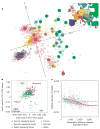
We used principal components analysis (PCA; ref. 8) to produce a two-dimensional visual summary of the observed genetic variation. The resulting figure bears a notable resemblance to a geographic map of Europe (Fig. 1a). Individuals from the same geographic region cluster together and major populations are distinguishable. Geographically adjacent populations typically abut each other, and recognizable geographical features of Europe such as the Iberian peninsula, the Italian peninsula, southeastern Europe, Cyprus and Turkey are apparent. The data reveal structure even among French-, German- and Italian-speaking groups within Switzerland (Fig. 1b), and between Ireland and the United Kingdom (Fig. 1a, IE and GB). Within some countries individuals are strongly differentiated along the principal component (PC) axes, suggesting that in some cases the resolution of the genetic data may exceed that of the available geographic information.
Figure 1
Population structure within Europe
When we quantitatively compare the geographic position of countries with their PC-based genetic positions, we observe few prominent differences between the two (Supplementary Fig. 1), and those that exist can be explained either by small sample sizes (for example, Slovakia (SK)) or by the coarseness of our geographic data (a problem for large countries, for example, Russia (RU)); see Supplementary Information for more detail. Our method also identifies a few individuals who exhibit large differences between their genetic and geographic positions (Supplementary Fig. 2). These individuals may have mis-specified ancestral origins or be recent migrants. In addition, although the sample used here is unlikely to include many members of smaller genetically isolated populations that exist within countries (for example, Basque residing in Spain or France, Orcadians in Scotland, or individuals of Jewish ancestry), in rare cases outlying individuals could reflect membership of such groups. For example, a small set of Italian individuals cluster ‘southwest’ of the main Italian cluster and one might speculate they are individuals of insular Italian origin (for example, Sardinia or Sicily).
The overall geographic pattern in Fig. 1a fits the theoretical expectation for models in which genetic similarity decays with distance in a two-dimensional habitat, as opposed to expectations for models involving discrete well-differentiated populations. Indeed, in these data genetic correlation between pairs of individuals tends to decay with distance (Fig. 1c). For spatially structured data, theory predicts the top two principal components (PCs 1 and 2) to be correlated with perpendicular geographic axes9, which is what we observe (r2 = 0.71 for PC1 versus latitude; r2 = 0.72 for PC2 versus longitude; after rotation, r2 = 0.77 for ‘north–south’ in PC-space versus latitude, and r2 = 0.78 for ‘east–west’ in PC-space versus longitude). In contrast, when there are K discrete populations sampled, one expects discrete clusters to be separated out along K − 1 of the top PCs8. In our analysis, neither the first two PCs, nor subsequent PCs, separate clusters as one would expect for a set of discrete, well-differentiated populations (see ref. 8 for examples).
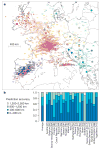
The direction of the PC1 axis and its relative strength may reflect a special role for this geographic axis in the demographic history of Europeans (as first suggested in ref. 10). PC1 aligns north-northwest/south-southeast (NNW/SSE, −16 degrees) and accounts for approximately twice the amount of variation as PC2 (0.30% versus 0.15%, first eigenvalue = 4.09, second eigenvalue = 2.04). However, caution is required because the direction and relative strength of the PC axes are affected by factors such as the spatial distribution of samples (results not shown, also see ref. 9). More robust evidence for the importance of a roughly NNW/SSE axis in Europe is that, in these same data, haplotype diversity decreases from south to north (A.A. et al., submitted). As the fine-scale spatial structure evident in Fig. 1 suggests, European DNA samples can be very informative about the geographical origins of their donors. Using a multiple-regression-based assignment approach, one can place 50% of individuals within 310 km of their reported origin and 90% within 700 km of their origin (Fig. 2 and Supplementary Table 4, results based on populations with n > 6). Across all populations, 50% of individuals are placed within 540 km of their reported origin, and 90% of individuals within 840 km (Supplementary Fig. 3 and Supplementary Table 4). These numbers exclude individuals who reported mixed grandparental ancestry, who are typically assigned to locations between those expected from their grandparental origins (results not shown). Note that distances of assignments from reported origin may be reduced if finer-scale information on origin were available for each individual.
Figure 2
Performance of assignment method
Population structure poses a well-recognized challenge for disease-association studies (for example, refs 11–13). The results obtained here reinforce that the geographic distribution of a sample is important to consider when evaluating genome-wide association studies among Europeans (for example, refs 3–5, 11). A crucial part is also played by spatial variation in phenotype. To examine this, we simulated genome-wide association data for quantitative trait phenotypes with varying degrees of linear latitudinal or longitudinal trends (Supplementary Fig. 4). Even for phenotypes modestly correlated with geography (for example, ≥5% of variance explained by latitude or longitude) the uncorrected P-value distribution shows a clear excess of small values, suggesting that population structure correction may be important even in seemingly closely related populations such as Europeans. Note that many factors, including sample size and distribution of sampling locations, will influence the effects of stratification on P-value distributions, and so these results should be considered only as illustrative of the settings in which stratification could become a problem in European samples.
In all our simulations, use of a PC-based correction12,14 adequately controlled for P-value inflation (Supplementary Fig. 4). The success of PCA-based correction is not unexpected here, because the PCs are excellent predictors of latitude and longitude, and we used only linear functions of latitude and longitude to determine the means of our simulated phenotypes. For real phenotypes, higher order functions of PC1 and PC2 and/or additional PCs might be necessary to correct for more complex spatial variation in phenotype. We speculate that at the geographic scale of many association studies carried out so far, many phenotypes are relatively uncorrelated with geography, and that this may explain why in many cases PC-based correction has had little impact in practice3,13. For phenotypes that are more strongly spatially structured within a sample (for example, height11,15,16), spurious associations due to population stratification should be more of a concern.
Although broad correlations between PCs and geography have been observed previously3–5,17,18 only the large number of loci and dense geographic sampling of individuals used here reveal the clear map-like structure to European genetic variation. Because at any one SNP the average level of differentiation across Europe is small (average FST = 0.004 between geographic regions; FST is a measure of differentiation between populations that takes values of 0 when there is no differentiation and one when there is maximal differentiation19), it is the combined information across many loci and many individuals that reveals fine-scale population structure in this sample.
An important consideration in interpreting our analyses is that, as a result of ascertainment bias20,21, current SNP genotyping platforms under-represent variation at low-frequency alleles. Low-frequency alleles tend to be the result of a recent mutation and are expected to geographically cluster around the location at which the mutation first arose; hence, they can be highly informative about the fine-scale population structure (for example, ref. 22). In addition, the PCA-based methods used here are based on genotypic patterns of variation and do not take advantage of signatures of population structure that are contained in patterns of haplotype variation1,23–25. Soon-to-be-available whole-genome re-sequencing will give us access to informative low-frequency alleles, and further statistical method development will allow us to leverage patterns of haplotype variation. The prospect of these developments suggests the geographic resolution presented here is only a lower bound on the performance possible in the near future. Thus, our results provide an important insight: the power to detect subtle population structure, and in turn the promise of genetic ancestry tests, may be more substantial than previously imagined.

METHODS SUMMARY

The sample of European individuals used here was assembled and genotyped as part of the larger POPRES project7. Genotyping was carried out using the Affymetrix GeneChip Human Mapping 500K Array Set. No significant differentiation was observed between individuals collected and/or genotyped at different times (analysis of variance, ANOVA, P > 0.05).
PCA was carried out using the smartpca program8,12. Before running PCA, we removed SNPs that showed evidence of high pairwise linkage disequilibrium as well as unique genomic regions (such as large polymorphic inversions) that might obscure genome-wide patterns of population structure. In addition, an initial PCA run was used to remove extreme genetic outliers.
When comparing the PC results to geography, we assigned each individual a location—typically the geographic centre of their corresponding population (Supplementary Table 3). The rotation of axes used in Fig. 1 is 16 degrees counterclockwise and was determined by finding the angle that maximizes the summed correlation of the median PC1 and PC2 values with the latitude and longitude of each country.
The new assignment method used here is based on independent linear models for latitude and longitude where each is predicted jointly by PC1 and PC2, including quadratic terms and an interaction term. To assess performance, we used leave-one-out cross-validation and adjusted for unequal sample sizes (for example, we weigh each population equally when computing the mean prediction accuracy).
For the genome-wide association simulations, we simulated each individual’s phenotype as having a mean determined by his or her geographic position and then simulated Gaussian distributed residual variation to obtain a phenotype with a fixed proportion of variance explained by geographic position. To perform the association test with PC-based correction, we used multiple linear regression with PC1 and PC2 as covariates, as implemented in the program eigenstrat8,12.

METHODS

Sample collection and genotyping

The samples were assembled and genotyped as part of the larger POPRES project currently consisting of ~6,000 individuals from worldwide populations7. The subsample of European individuals used here is derived from two independent collections: the London Life Sciences Population (LOLIPOP) study26, which consists mainly of European individuals sampled in London, and (2) the CoLaus study27, which represents a broad set of European individuals sampled from Lausanne, Switzerland. The combined sample contains individuals with origins from across Europe (Supplementary Table 2), although origins from eastern Europe are generally less well represented (for example, Finland, Latvia, Ukraine, Slovakia and Slovenia) and some countries are not sampled at all (for example, Belarus, Estonia, Lithuania and Moldova).
Genotyping was carried out using the Affymetrix GeneChip Human Mapping 500K Array Set according to published protocol. We observe no significant differentiation in the PCA between individuals collected and/or genotyped at different times (ANOVA, P> 0.05). A thorough description of the collections, data processing methods and public data release is presented in ref. 7.
To prepare the sample analysed here, we used the demographic data available for each individual to create a ‘geographic origin’ that represents a single location from which the individual’s very recent ancestry is derived. Where possible, we based the geographic origin on the observed country data for grandparents. We used a ‘strict consensus’ approach: if all observed grandparents originated from a single country, we used that country as the origin. If an individual’s observed grandparents originated from different countries, we excluded the individual. Where grandparental data were unavailable, we used the individual’s country of birth.
We excluded individuals whose putative geographic origin was from outside of Europe (for example, Europeans from USA, China, Mozambique, Ivory Coast, and so on), individuals who were putatively related (using the same approach as in ref. 7), and individuals found to be outliers in a preliminary PCA run (for more detail, see the section on PCA below). Because of the large number of Swiss individuals available and the availability of language information for most of these individuals, for some analyses, we divided Swiss individuals into three ancestry labels (Swiss-French, Swiss-German and Swiss-Italian) on the basis of their reported primary language. Finally, we chose to include only a random sample of 200 individuals from the United Kingdom and 125 Swiss-French to obtain more even sample sizes across Europe. Supplementary Table 2 provides more detail on how the sample numbers changed with each step in the sample preparation, and Supplementary Table 1 summarizes the number of grandparents observed for the 1,387 individuals used in the final sample.
Geographic locations associated with each country were assigned using the central point of the geographic area of the country (Supplementary Table 3). Three exceptions are the Russian Federation, Sweden and Norway, where the geographic locations were assigned to the location of the capitals of these countries (because central points were assumed to not be as reflective of the probable origins of these individuals). Within Switzerland, we represent the Swiss-French with the geographical coordinates of Geneva, the Swiss-German with those of Zurich, and Swiss-Italian with those of Lugano. Distances between points are always calculated as great circle distances.
For estimating FST19 and for assessing the performance of assignment, we combined individuals into geographic groupings with larger and more comparable sample sizes than the original ancestral origins. These groupings do not reflect discrete structure in the data, rather the practical need to create geographical groupings with reasonable sample sizes. The strategy was to create a 3 × 3 grid of regions across Europe, with a tenth region for far southeastern Europe (Supplementary Table 3).

Principal components analysis

To conduct PCA, we used the smartpca software8,12. In a preliminary phase of the study, we ran smartpca using default settings and five outlier detection iterations, which resulted in the identification and exclusion of 34 individuals that were greater than six standard deviations from the mean PC position on at least one of the top ten eigenvectors. For our final run, we use the default settings without any outlier removal.
To avoid artefacts due to patterns of linkage disequilibrium3, we filtered autosomal SNPs using two approaches simultaneously. First, before running PCA we used the PLINK28 software to exclude SNPs with pairwise genotypic r2 greater than 80% within sliding windows of 50 SNPs (with a 5-SNP increment between windows). Second, we took an iterative approach by running an initial PCA and removing chromosomal regions that showed evidence of reflecting regions of exceptional long-range linkage disequilibrium rather than genome-wide patterns of structure. These regions are detectable by plotting the correlation between individual PC scores and genotypes against the genome and identifying sharp, concentrated peaks in correlation (alternatively, we could have plotted the magnitude of elements of the SNP-based eigenvectors from the PCA, but here we used the correlation-based approach because much of this work was done before the release of recent versions of smartpca that provide the SNP eigenvectors). SNPs falling within a 4 megabase region of a peak were excluded from the final PCA. Initially, peaks were defined by taking the top 0.01% of SNPs correlating with a PC for each of the top 6 PCs of the preliminary analysis. In this initial analysis PCs 1 and 2 did not appear to be artefacts of long-range linkage disequilibrium, but we still removed regions around the top PC-correlated SNPs. This approach is conservative (in the sense that we potentially remove more SNPs than necessary and hence might hinder ourselves from detecting subtle patterns). The procedure removed SNPs in regions such as the lactase region (2q21), the MHC region and the inversion regions 8p23 and 17q21.31, amongst others. The final number of SNPs used for PCA was 197,146 SNPs. The patterns of structure observed in PCs 1 and 2 were robust to further removal of chromosomal regions correlated with the PCs, suggesting the observed patterns are representative of genome-wide differentiation.
The inter-individual genetic correlations used in Fig. 1c were the same as those used for the PCA analysis and were obtained using the formula of ref. 8 as computed by smartpca.
The angle used to create the rotated PC1–PC2 coordinate system that is used in Fig. 1 was obtained by maximizing θ in the objective function:
f(θ)=Cor(g(θ,v1,v2),Long)+Cor(h(θ,v1,v2),Lat)
where g(θ, v1, v2) and h(θ, v1, v2) are functions that return coordinates of v1 (the PC1 eigenvector) and v2 (the PC2 eigenvector) after rotation about the point (0,0) in PC1–PC2 space by the angle θ. Lat and Long are vectors of the latitude and longitude of each individual, and Cor(·, ·) is the correlation function. The resulting optimal value of θ was found to be −16 degrees.

Spatial assignment

We assigned each individual to a specific geographic location by fitting independent linear models for latitude and longitude as predicted jointly by PC1 and PC2. We used the rotated PC1 and PC2 scores because these more strongly correlate with latitude and longitude (see main text). Specifically, we use the linear models:
x=βx1u1+βx2u2+βx11u21+βx22u22+βx12u1u2+ε
y=βy1u1+βy2u2+βy11u21+βy22u22+βy12u1u2+ε
where x and y are vectors containing the longitude and latitude, respectively, of each individual, u1 and u2 are vectors containing the rotated PC1 and PC2 scores, respectively, for each individual (that is, u1 = g(θ, v1, v2), u2 = h(θ, v1, v2), where θ = −16 degrees), β coefficients are regression coefficients, and ε represents residual error.
To perform assignment, we first estimated the β coefficients by means of least-squares regression with a training set of individuals with known locations and then used the estimated coefficients of the linear model to predict the latitude and longitude of a test individual on the basis of their PC1 and PC2 values (we call this a ‘continuous assignment’). We also made a ‘discrete assignment’ by assigning individuals to the country for which the centre-point is closest to the latitude and longitude predicted by the continuous assignment method. In practice, the two methods produce roughly similar results (Supplementary Table 4). As a reference point for evaluating performance, the Supplementary Table also reports statistics for how a method would perform if all individuals were assigned to a central location within Europe (here taken to be Austria).

Simulation of genome-wide association study for a spatially structured quantitative trait

We simulated two types of traits: one with a latitudinal trend in the mean and the other with a longitudinal trend. For each type of trait, we simulated a range of different degrees to which the geographical axis (latitude or longitude) contributed to the overall variance in the trait. Specifically, we let x′ and y′ be normalized latitudinal and longitudinal variables, respectively (that is, x′ = (x − [x with macron])/σx and y′ = (y − y) σy, where x is a vector of each individual’s longitude, y is likewise for latitude, t is the mean value of the elements of t, and σt is their standard deviation). We then simulated two phenotypes with the mean determined by x′ or y′: [var phi]x = x′ + εx and [var phi]y = y′ + εy, where ε is a vector of random normal deviates with mean 0 and variance s2. We let s2 take values of (1, 4, 19, 99), so that the resulting variance in the traits are approximately (2, 5, 20, 100), and the proportion of variance explained is approximately (50, 20, 5, 1) per cent.
To perform the association test with PC-based correction, we used multiple linear regression with PC1 and PC2 as covariates as implemented in the software eigenstrat12. The Armitage χ2 statistic was used to test the strength of the association. We also calculate an inflation statistic, by taking the ratio of the 50% quantile of the observed Armitage χ2 statistic with that expected under the null χ21 distribution.

Supplementary Material

Supplementary information

Acknowledgments

We thank J. Kooner and J. Chambers of the LOLIPOP study and G. Waeber, P. Vollenweider, D. Waterworth, J. S. Beckmann, M. Bochud and V. Mooser of the CoLaus study for providing access to their collections. Financial support was provided by the Giorgi-Cavaglieri Foundation (S.B.), the Swiss National Science Foundation (S.B.), US National Science Foundation Postdoctoral Fellowship in Bioinformatics (J.N.), US National Institutes of Health (M.S., C.D.B.) and GlaxoSmithKline (M.R.N.).

Footnotes

Full Methods and any associated references are available in the online version of the paper at www.nature.com/nature.
Supplementary Information is linked to the online version of the paper at www.nature.com/nature.
Author Contributions M.R.N. coordinated sample collection and genotyping. K.S.K., A.I., J.N. and A.R.B. performed quality control and prepared genotypic and demographic data for further analyses. C.B., M.S., M.R.N., S.B., J.N., T.J., K.B., Z.K., A.R.B. and A.A. all contributed to the design of analyses. J.N., S.B., T.J., K.B. and Z.K. performed PCA analyses. M.S. and J.N. designed and performed assignment-based analyses. T.J. and J.N. performed genome-wide association simulations. J.N., C.B., M.S., M.R.N. and A.A. wrote the paper. All authors discussed the results and commented on the manuscript.
Author Information Reprints and permissions information is available at www.nature.com/reprints.

Share

Twitter Delicious Facebook Digg Stumbleupon Favorites More