





A health report from the Pentagon contains some troubling statistics,
and suggests more than half all U.S. troops are clinically overweight.
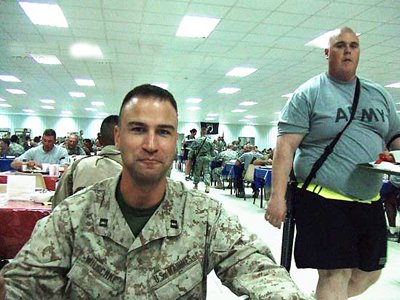 The report, released last week, suggests muscle mass is part of the reason 53% of troops are now tipping the scales.
From the report:
There used to be exemptions if an active duty member was overweight — but in good shape. Beefy troops would find themselves with a tape measure around their waist and neck while exact calculations were made establishing personal BMI.
As of late, though, due in small part to exposure to combat, Pentagon authorities have sought to trim back on some of those muscle-bound Marines, soldiers and sailors.
Not because muscle-bound troops ware any less fit, but because an average male grunt can't drag a 250-pound buddy from the kill zone, regardless of whether that weight is from fat or from muscle.
Among the weight statistics were other alarming numbers regarding post traumatic stress, sexual assault, drug abuse and especially alcohol abuse.
According to the report, a full third of America's military reported binge drinking at least once within the last 30 days — worst of the branches was the Marine Corps, which reported half its members reported a binge drinking session in the last 30 days.

From the report:
Across all ages, 51.2% of service members
were overweight, most often in the Coast Guard (57.2%) than all other
services. For males, over half (54.2%) were classified by the Body Mass
Index (BMI) as overweight, and a little over one-third (34.4%) of females were overweight. (Note: BMI does not account for body muscle mass which may contribute to the high rate of overweight service members.)
The news prompted CNN Battleland's Mark Thompson to quip, "Apparently, Pentagon fat isn’t limited to gold-plated weapons, logistical lard and Beltway bandits."There used to be exemptions if an active duty member was overweight — but in good shape. Beefy troops would find themselves with a tape measure around their waist and neck while exact calculations were made establishing personal BMI.
As of late, though, due in small part to exposure to combat, Pentagon authorities have sought to trim back on some of those muscle-bound Marines, soldiers and sailors.
Not because muscle-bound troops ware any less fit, but because an average male grunt can't drag a 250-pound buddy from the kill zone, regardless of whether that weight is from fat or from muscle.
Among the weight statistics were other alarming numbers regarding post traumatic stress, sexual assault, drug abuse and especially alcohol abuse.
According to the report, a full third of America's military reported binge drinking at least once within the last 30 days — worst of the branches was the Marine Corps, which reported half its members reported a binge drinking session in the last 30 days.